Meet The Team

Writer/Director
Jake Osborne
Jake Osborne is a Melbourne-based screenwriter, Director and editor and the writer and director of Wraith. Jake is a massive fan of horror films, particularly otherworldly ones. He takes his inspiration from both films and games, and some of his main inspirations for Wraith are Silent Hill and Alan Wake. When not making films, he likes to play games and see his friends. He hopes you enjoy the film!

Producer
Hugh Braithwaite
Hugh Braithwaite is an aspiring Australian film producer. With experience producing a variety of screen content, such as a Television Commercial, narrative and documentary short films, Hugh has developed a wide range of skills. This includes creating schedules and budgets, communicating with cast and crew, liaising with local councils and running a social media and marketing campaign. Hugh enjoys being organised and prepared in life and brings this mindset onto set to ensure things run smoothly. Alongside a lifelong passion for movies and television, producing was the perfect place to blend Hugh's passions and skills.
Editor
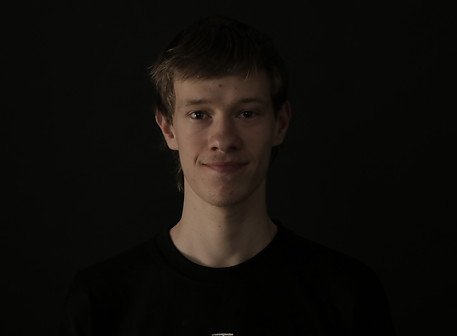
Jaden Sewell
Jaden Sewell is a German-Australian film editor based in Naarm/Melbourne. With a strong focus on rhythm, pacing, and emotional storytelling, Jaden brings a thoughtful and collaborative approach to post-production. His editing work spans narrative and documentary projects, where he strives to shape performances and tone through precise and intuitive editing. Alongside his editing practice, he has experience in sound design, adding a detailed awareness of how audio can enhance the emotional depth of a scene. Jaden’s passion lies in creating films that often embrace a sense of timing and irony, creating stories that balance sincerity with liveliness and a distinct human touch.

Sound Designer
Bridget Humphreys
Bridget Humphreys is a Melbourne filmmaker. Recently graduated from Swinburne with a Bachelor of Film and Television (Honours). She sound designed the 16mm film Slim Jim Goes Big (2023) and A Magical Story (2025) and Wraith (2025). While sound is her main focus, she has dabbled in more camera-oriented roles with 2nd assistant camera on Appoline’s “Home Home” (2024) music video and being cinematographer for a prospective Paul Sadler Swimland (2024), and assistant camera and data wrangler for Ripples (2025). Sound design fascinates her with its capability of perfecting the film, working with all other elements to make a whole idea.

Co-Director of Photography
Blake Zmood
Blake Zmood has worked alongside our Director in bringing his vision of the films visual stylings to the screen. I’ve worked on a number of short films, advertising, and drone work in my time as a filmmaker, as a way to keep honing my craft and creating deep and meaningful experiences within film.

Co-Director of Photography
Harrison Hocking
Harrison Hocking is the Co-Director of Photography for this terrifyingly awesome flick. I’ve loved horror movies all my life — they’re actually the reason I decided to pursue a Bachelor’s in Film and TV in the first place. My filmmaking style draws heavily from my love of horror combining atmospheric lighting, deliberate framing and tension-driven movement to create a sense of unease that lingers. I’m fascinated by how visual storytelling can make audiences feel something, particularly something ominous. This project has been an incredible opportunity to refine this approach. Having this project as my graduating film has been nothing short of a dream come true, and it’s only deepened my love for the genre and the film making process.

Production Designer
Jamie Guillard
Jamie Guillard is the production designer of Wraith, with previous experience as a producer, gaffer, cinematographer, and grip. Being a production designer has been a lot of fun too, but it definitely comes with its own unique challenges. A lot of the thought process behind Wraith was about capturing a more 90s aesthetic. I was inspired by how to translate this nightmare-like hospital into the 90s. I did a lot of research into what hospitals looked like during that time and how we could best represent that era. Overall, I’m really proud of what I was able to do and what the team has achieved with this amazing short film. I’m looking forward to everyone seeing the final cut.

Sound Recordist
Rory Clark
Rory Clark is the sound recordist for Wraith. The world of sound and audio is my passion, and I thrive when using my skills to bring creative and unique ideas to life. For Wraith, its been particularly exciting, as the possibilities to subconsciously influence the audience using aural elements is boundless - I’m super keen to share it with everyone!


Crew Statements
Jake - Writer/Director/Colourist
As the writer and director of Wraith, I have found the post-production process to be incredibly fulfilling, but extremely challenging. In the writing process, I included certain aspects which I hadn’t learnt how to accomplish on screen yet (i.e. tracking objects, masking video onto screens, replacing backgrounds), so when it came to post, end being in the editing booth with Jaden, the film became a large learning process in which things often felt impossible, and other times like they were only held together through sheer luck and miracles. While I am the director, my knowledge of Davinci Resolve Studio often caused me to take the editor’s seat, which, in hindsight, I think I may have done too much. Since picture-lock, it has primarily been me booking editing sessions and working alone on VFX and minor editing changes since I knew what I wanted and how I wanted to accomplish it. It has given me a deep sense of connection with the making of the film, but as a consequence, has made me sometimes unable to view the film objectively and a little defensive against feedback, but overall the positive reception to the film thus far has made me confident I’ve done a good job. That being said, I recognise the effect this has had on Jaden’s role as the editor of the project, since he wasn’t often present for later sessions, instead working hard on his other film. I believe this process has allowed us both to work hard on our films, but I think he could’ve been included more.
The biggest challenge I faced on this film as a director was having to make cuts to what I originally planned, even if, in hindsight, it made the film work significantly better. At the beginning of the editing process, Jaden and I worked very slowly, not touching the film at all over the course of the mid-year break, but eventually achieved an assembly cut which was completely script accurate (minus the VFX, which were just roughly timed and imagined to be there). This cut largely kept for the first half of semester 2, keeping the film at 11 minutes, but feedback from Jill and the cohort were usually focused on whether the film was a horror or not and what the ending actually meant (it ended with the protagonist standing in a black void, a very ugly visual effect which often elicited giggles). This kept up until close to our picture lock goal, when the combination of feedback and not having seen the film in a while caused me to take the controls and cut 3 minutes off the film, shortening long sequences and getting to the point quicker. This was originally challenging because I wanted the film to be uncomfortable, taking an unusually long time to satisfy the audience. However, after a slight crash-out, the film was made much more engaging and clear about its identity. I don’t think I could’ve achieved this without all of the prior work done in attempting to make it work as written.
Hugh - Producer
The post-production process for Wraith, as the producer, went pretty smoothly. Going into this year, we only had 4 out of 8 heads of department remaining; however, this includes our director, editor, sound designer and me, so we still had everyone crucial to the editing process. Aside from attending the weekly consults and screenings, I would meet up with Jake and Jaden to watch the edit and provide feedback every week or two. I also completed all of the usual documentation that a producer does, such as finalising cost reports and creating a marketing plan and website. Creating these documents helped me gain new skills and gain more confidence in making these sorts of documents.
We initially had a crowdfunding page earlier in the year for pre-production, which had been inactive for 6 months. So I relaunched the campaign to give it one final push to get funding for festival entries. From this relaunch, we raised an additional $410, which is a great asset when it comes to entering festivals. In the end, we were under budget which was great, as we didn’t raise as many initial funds as expected. This was due to negotiating a very good price on our location and saving on catering costs by finding good deals on food platters.
Looking ahead, I’ll continue to work on this film by running our social media campaign and promoting the film. This will involve maintaining our preexisting website and Instagram pages to provide our audience with updates about the film. This will lead to entering our film into festivals, which we have a plan for. We will start by submitting to local prestigious Australian festivals such as MIFF or the Sydney Film Festival. We will also try submitting to prestigious international festivals such as Venice or Berlin. Another avenue is more niche festivals, such as horror festivals, which would be uniquely suited for our film.
Jaden - Editor
‘Wraith’ is a 9-minute psychological horror film that explores the themes of guilt, grief, and death through the perspective of its protagonist, Mark. As the editor of Wraith, the primary objective I had set out to do was to create a cohesive and emotionally resonant narrative that reflected Mark’s fractured sense of reality as the audience watches him navigate a liminal space somewhere between life and the afterlife. Working closely with the film’s director, Jake, I sought out to translate the film’s thematic essence into its rhythm, pacing, and structure. Editing was done using DaVinci Resolve Studio - a new program for both myself and the director, which allowed us to collaboratively experiment and refine our workflow whilst exploring the software’s creative potential at the same time.
From the earliest stages, the keywords I had that were central to Wraith’s concept were: grief, guilt, and death. I approached each sequence focusing on an emphasis on timing, pace, and rhythm, using them to guide the viewer’s emotional response. Initially drawing inspiration from Walter Murch’s “Rule of Six,” as I planned to do from the very beginning, I learned to prioritise emotional truth and story clarity over strict continuity – which our instructor Jill also helped with a lot.
The technical workflow followed a structured post-production pathway. Footage shot on the ARRI Alexa 35 was transcoded to Apple ProRes 422 proxies for offline editing, while final mastering is to be exported in ProRes 4444 4K UHD with 48 kHz 24-bit WAV audio.
After syncing and organising the rushes, I built multiple timelines to test various pacing and narrative flows. These different edits allowed the director to visualise alternate cuts and structures. The assembly edit evolved through five stages, culminating in a picture-locked master, followed by grading and sound mixing.
One of the most helpful things throughout the process was the screenings we would have for our entire cohort, allowing us to show everyone the work we had done up to that stage as well as seeing what stage everybody else was up to, being able to give them any necessary advice or opinions. Ultimately, the process taught me that editing is not just about assembling shots, it’s about sculpting emotion, guiding empathy, and very importantly shaping how audiences feel a story as much as how they see it.
Overall, collaboration was at the heart of my process. Jake and I reviewed cuts often weekly, exchanging notes on the most suitable rushes to be used, performance, and psychological tension. These meetings and discussions helped ensure that the film’s sound and image rhythmically reinforced one another. Reflecting on this experience, Wraith was a defining project for me as an editor, it was extremely different for me in any aspects, from learning how an entire new software works along with its workflows, down to the fact that I had never worked with the horror genre before, nonetheless, such a unique take on one. Adapting to the workflow of DaVinci Resolve not only expanded my technical skill set but also deepened my understanding of editing as emotional storytelling.
Bridget - Sound Designer
As the sound designer of Wraith, I did the following:
It was initially planned to have some Additional Dialouge Recording for both Cass and Mark due to the abstract nature of the film, it was needed for at least Cass to have her voice lines placed within the ambience of the film at certain moments for the story. This ADR was extended once we went through production, where the onset audio was plagued by uncontrollable elements like ventilation and speaker noise, so it ended up being wanted to redub the whole film.
-
Cass has little lines, with her voice being mixed throughout the film outside of one scene. The ADR session took place in July due to scheduling which meant before a cut was ready, but with knowing the script and what I wanted to do with the lines we left with what we needed.
-
Mark’s ADR was done after picture lock and was happily done within 2 hours, the film has little lines for him, mostly being “cass” and that gave us more time to go over all the lines and performances, notably removing a line that wasn’t needed, and do additional performance for sound design. This was added in before the final screening and did not prove to be obviously ADR.
-
Foley recording was focused mainly on the footsteps, even while we recorded the best we could a lot of the noise pollution made it harder to manipulate the footsteps we recorded on set.
-
Footsteps, took 2 sessions to complete the entire film which ranged from running to walking, some issues with the type of shoe and wood creaking noises from the panel used, but both could be fixed later.
-
Rustles were done in the time afterwards at pivotal moments
-
-
Sound effects were needed for the computer scene as what was done on set would not match what VFX was done afterwards.
-
Keyboard sounds were done with my own keyboard that is the right kind, after the VFX was done, mouse sounds also were done then.
-
Other sound effects due to time were taken from sound libraries, door sounds phone ring and placement.
-
Sound design wise a lot of the ambience was sourced through sounds I had recorded myself in the past, plugin-wise wise a lot of reverb and automation is used to craft it and match it with the action.
Music is being done by a composer in America, kept up to date with every cut and communicated with me their needs and sent through anything new for screenings.